The beginning of a new year often brings a quiet moment of reflection, and for many of us, that reflection naturally extends outdoors. Summer has a way of revealing what’s working in the garden, what feels a little tired, and what could be improved with just a bit of thought.
The good news is that setting your garden up for 2026 doesn’t require a significant overhaul. With a handful of simple garden tips, you can create a space that feels calmer, healthier, and far easier to enjoy over the year ahead. Rather than rushing into significant changes, this approach is about slowing down, making intentional decisions, and working with what you already have.

Simple Garden Tips Start With Observation, Not Action
Spend time in your garden at different times of the day-morning, afternoon, and evening-to observe sunlight patterns, shade, and water flow. Use a notebook or camera to note areas that need attention, helping you make informed decisions that simplify garden care in 2026.
This period of observation gives you clarity. You may realise that certain plants are struggling simply because they’re in the wrong position, or that one corner of the garden never gets used because it feels too exposed or too hot.
Understanding these patterns allows you to make smarter choices later, rather than reacting or planting impulsively. A garden designed with awareness is always easier to manage and far more satisfying to live with.
Simple Garden Tips Begin With Healthy Soil
Healthy gardens always begin below the surface. Improving soil health is one of the most impactful simple garden tips you can apply, especially at the start of the year when plants are actively growing.
Over time, soil can become compacted, depleted of nutrients, or dry and hydrophobic. Refreshing it with organic matter such as compost or aged manure helps restore structure, encourages beneficial microorganisms, and improves moisture retention.
Mulching plays an equally important role, protecting soil from extreme heat, reducing evaporation, and slowly breaking down to enrich the ground. When soil is healthy, plants are more resilient.
They cope better with heat, require less water, and are less susceptible to pests and disease. It’s a quiet investment that pays off all year.


Edit Your Garden Before You Add to It
It’s tempting to think that improving a garden means adding more plants, but one of the most effective, simple garden tips is actually editing what’s already there. Gardens, like homes, benefit from a bit of decluttering.
Take a critical but gentle look at your existing plants. Some may have outgrown their space, while others might be demanding more attention than they’re worth.
Removing or relocating a few plants can instantly improve airflow, light penetration, and the overall balance of the space. Editing also helps you see your garden more clearly.
Once the overcrowding is reduced, the remaining plants tend to shine, and maintenance becomes noticeably easier. A simpler garden often feels more intentional and far more calming.
Choose Low-Maintenance Plants: A Simple Garden Tip That Lasts
If there’s one decision that shapes how much time you’ll spend maintaining your garden in 2026, it’s plant choice. Selecting species that suit your local climate and conditions is one of the smartest, simplest garden tips you can follow.
In Australia, this often means leaning into plants that are naturally adapted to heat, drought, and variable weather.

Native plants and Mediterranean-style species tend to require less water and pruning once established, while still offering structure, texture, and seasonal interest.
This doesn’t mean your garden needs to look sparse or uniform. Thoughtful combinations of hardy plants can be just as lush and beautiful, without the constant need for intervention. When plants are well matched to their environment, the garden essentially looks after itself.

Rethink How You Water
Watering habits have a considerable influence on plant health, yet they’re often overlooked. One of the most practical, simple garden tips is to focus on deep, infrequent watering rather than shallow, daily watering.
Deep watering encourages roots to grow downward, making plants more resilient during hot spells. Watering early in the morning reduces evaporation and allows moisture to reach the roots where it’s needed most.
If you use an irrigation system, this is a great time to check that everything is working efficiently and delivering water evenly.
By being more intentional with watering, you not only conserve water but also support stronger, healthier growth year-round.
Simple Garden Tips That Design for Real Life
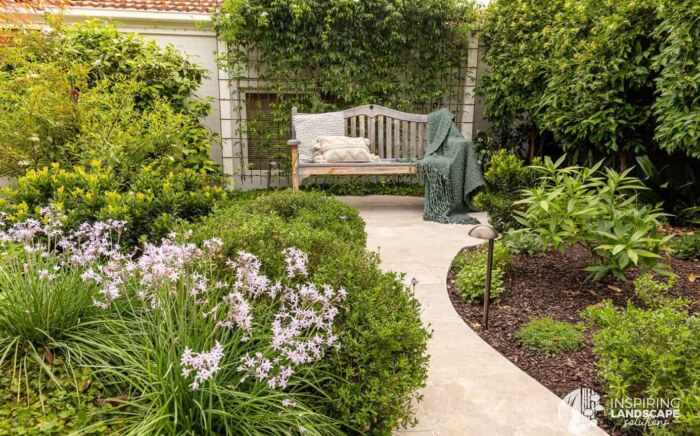
A garden should support your lifestyle, not just look good from the window. One of the most overlooked simple garden tips is to reflect on how you want to use the space day to day.
Perhaps you crave a quiet corner for morning coffee, somewhere shaded and private. Maybe you need a practical area where kids or pets can move freely, or a space that’s set up for relaxed outdoor meals.

These uses don’t require major construction; sometimes it’s as simple as repositioning furniture, adding a small paved area, or creating a defined seating zone. When a garden aligns with how you live, it naturally becomes a place you return to more often, and that’s when it truly comes to life.

Create a Sustainable Maintenance Rhythm
Rather than tackling everything at once, think about garden care as a gentle rhythm. Small, regular actions are far more effective than occasional, considerable efforts. This mindset is at the heart of many simple garden tips.
A quick weekly check-in allows you to catch issues early, whether it’s a stressed plant, weeds starting to take hold, or irrigation adjustments that need attention. Seasonal tasks like pruning and feeding become easier when they’re anticipated rather than reactive.
This approach keeps the garden feeling manageable and prevents it from becoming overwhelming, especially during busy periods of the year.
Planning Ahead Gently: Simple Garden Tips for the Year Ahead
Finally, use this time to think ahead, but without urgency. Make note of areas you’d like to improve later in the year, plants you’ve admired, or changes that could be tackled in autumn or winter.
Planning doesn’t mean committing immediately. It simply gives your garden direction and allows you to move forward with confidence when the time feels right.
A thoughtful plan, built around simple garden tips, ensures that any future changes feel considered rather than rushed.


Setting the Tone For 2026
Preparing your garden for 2026 isn’t about perfection. It’s about creating a space that supports your wellbeing, works with the climate, and feels enjoyable rather than demanding.
By applying these simple garden tips, you’re setting the foundation for a year of healthier plants, lower maintenance, and more moments spent truly enjoying your outdoor space. And that’s a goal worth growing towards.




Leave a Comment