Garden lighting design should never be an afterthought, as many of us use our gardens in the late afternoon and evening. In Australia, especially, warm days often roll into long, relaxed nights outdoors. We entertain at dusk, unwind after work and sit outside once the heat dies down. Yet so many gardens are designed purely for how they look in full daylight.
Here’s the thing: if your garden only shines at midday, you’re missing half the experience. Designing with night time in mind transforms your outdoor space from something you look at into something you truly live in.

Garden Lighting Design Changes How a Space Feels
During the day, gardens are open and exposed to the sun. At night, they become intimate. Layered. Atmospheric.
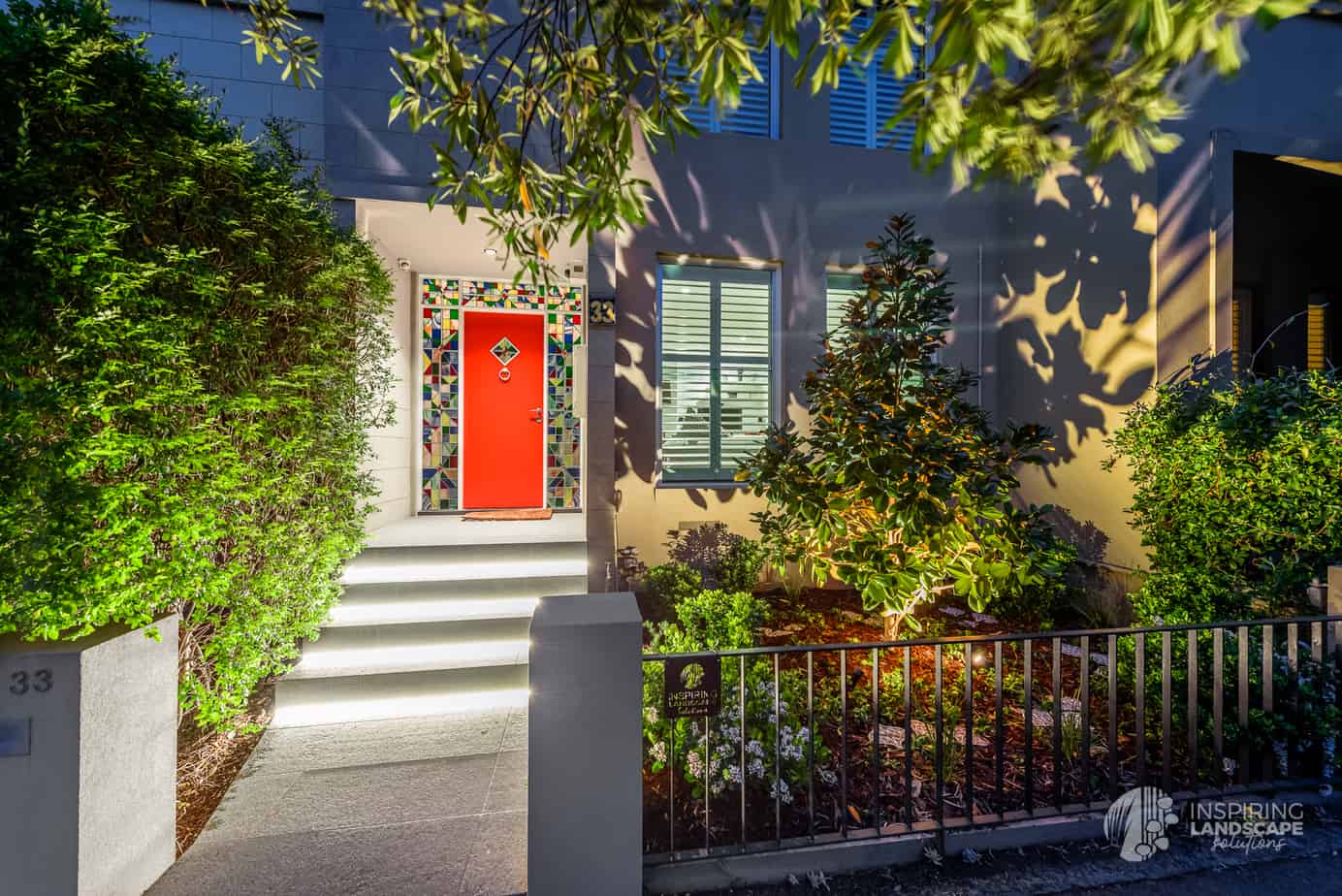
Good garden lighting design isn’t just about brightness; it’s about selecting the right fixtures, such as spotlights, path lights, or wall washes, for each feature to create a welcoming mood.
Soft uplighting under a tree can make its canopy glow like a sculpture, while subtle pathway lighting guides movement without glare, and gentle wall washes highlight texture and structure.
The difference between harsh lighting and thoughtful lighting is the difference between a backyard and an experience. At night, shadows become part of the design. Silhouettes matter. Texture becomes more dramatic.
A simple plant can suddenly feel architectural. And yet, despite all of this, lighting is often where clients try to reduce costs.
The Hidden Cost of Skimping on Garden Lighting Design
I’ve seen it time and time again: clients reduce the number of lights, install a lesser system, or skip lighting altogether in their garden design.
On paper, it seems like a saving. In reality, it often becomes a regret. Some clients end up with beautiful gardens during the day, but at night, they’re staring into an abyss of darkness.
Others decide to add lighting later. But, by then, the garden is mature or maturing. Retrofitting lighting means digging through established beds, damaging roots, losing plants, and creating an unnecessary mess.

Not to mention, installation is always more expensive once everything is already in place. Lighting installation is significantly more cost-effective when done during the initial build. Wiring can be concealed. Conduits can be positioned correctly; no plant loss. No rework. No double handling. Cutting corners early rarely saves money in the long term.

Why Garden Lighting Design Should Start at Concept Stage
Starting your garden with lighting in mind helps you create a space that feels inviting and thoughtfully designed, inspiring homeowners to envision their garden as a welcoming retreat from the start.
One of the biggest mistakes in garden projects is leaving lighting until the end. When garden lighting design is considered at the concept stage:
*Conduits can be discreetly installed
*Feature trees can be positioned for dramatic uplighting
*Seating areas can be arranged with evening ambience in mind, ensuring they are comfortably illuminated for relaxation.
*Similarly, feature trees can be positioned for dramatic uplighting, and pathways can be lit to guide visitors safely through the garden, all of which contribute to a cohesive night time design.
*Cabling can allow flexibility as plants mature.
*Systems can be selected that align with how you want to control your lighting.
Another common issue? Not installing enough cabling. Plants grow. They mature. They change shape. Just as pruning or repositioning plants, lights often need slight adjustments over time. If there isn’t enough cable allowance, the light can’t move. The plant grows; the light stays stuck.
It’s common sense to build in flexibility from the start, and the cost difference is minimal compared to the frustration later. Lighting should evolve with your garden, not restrict it.
Listening to the Supplier Matters
Another costly mistake I’ve seen is clients attempting to reduce installation costs by not following supplier specifications.
One client tried to save approximately $300 by installing a transformer that the lighting supplier didn’t recommend.
The result? Her entire warranty was invalidated. Around 18 months later, ten lights failed. The “advice-giver”

(i.e., landscaper) was nowhere to be seen. The cost to rehaul the system, replacing impacted lights, cabling, and repairing affected planting, exceeded $3,000, not including the disruption.
When it comes to garden lighting design, trust the supplier’s specifications over third-party shortcuts. The supplier backs the warranty, helping clients feel confident in their investment and reassuring them of long-term quality.

Investing in the Right Lighting System For Your Garden
Not all lighting systems are equal. Some clients underinvest in flexibility, choosing manual systems when automation would better suit their lifestyle.
Others install lighting that doesn’t properly highlight key garden elements, either selecting a wattage that’s too low (barely visible) or too high (harsh and overpowering).
Effective landscape lighting design is about balance. It’s about choosing the right beam spread, the correct colour temperature, and the appropriate intensity for each feature.
Lighting should enhance, not overwhelm, and this is where professional advice really matters. Underpowered lighting wastes potential. Overpowered lighting destroys atmosphere. The right advice ensures your garden feels layered, calm, and intentional.
Garden Lighting Design Enhances Structure
A well-designed garden has strong bones: pathways, trees, retaining walls, feature planting, pergolas, or architectural elements. At night, those bones should still be visible.
Strategic landscape lighting design reinforces structure. It draws attention to vertical elements, defines edges, and creates depth. Without lighting, even the most beautifully structured garden can disappear into darkness.

Layered lighting works best:
*Ambient lighting for atmosphere
*Task lighting for safety *Accent lighting for focal points
When these layers are integrated early, the result is seamless.

A Garden That Lives Beyond Sunset
The reality is simple: most of us experience our gardens in the evening far more often than we realise, after work, dinner, or relaxing outside, so designing for night time use can significantly enhance your outdoor living.
When night time shapes your lighting garden design, you gain:
*Extended usability
*Increased ambience
*Greater visual impact
*Improved safety
*A stronger connection between the house and the garden
Your garden doesn’t disappear at sunset; it transforms.
Final Thoughts on Your Garden Lighting Design
Designing a garden is about more than plants and paving. It’s about experience. And experience doesn’t stop when the sun goes down.
By prioritising garden lighting design from the very beginning, you can see how it encourages you to create a space that feels layered, welcoming, and alive long after daylight fades.

If your garden currently goes dark the moment the sun sets, perhaps it’s time to rethink how night time could shape your design. The most memorable gardens don’t just look beautiful in the day; they glow at night.





Leave a Comment