• Home
    Home
  • Main Portfolio
    Main Portfolio
  • MIFGS 2023
    MIFGS 2023
  • MIFGS 2024
    MIFGS 2024
  • About Us
    About Us
  • Our Process
    Our Process
  • Services
    Services
    • Custom Design
      Custom Design
      • Feng Shui Garden Design
        Feng Shui Garden Design
    • Design Implementation
      Design Implementation
    • Construction & Maintenance
      Construction & Maintenance
    • DIY – DesignedBliss4U
      DIY – DesignedBliss4U
    • Other Services
      Other Services
      • Staging for sale
        Staging for sale
      • Productive gardens
        Productive gardens
      • Rejuvenation projects
        Rejuvenation projects
  • Design Fees & Packages
    Design Fees & Packages
  • Media Publications
    Media Publications
  • Design Resources
    Design Resources
    • FAQs
      FAQs
    • Why use a designer?
      Why use a designer?
    • Ebooks & Videos
      Ebooks & Videos
    • Blog
      Blog
    • Before & After – Glen Waverley Garden Design
      Before & After – Glen Waverley Garden Design
    • Before & After – Blackburn Garden Design
      Before & After – Blackburn Garden Design
    • Before & After – Hawthorn Garden Design
      Before & After – Hawthorn Garden Design
    • Case study – Water Features
      Case study – Water Features
    • Case Study – Productive Garden Design
      Case Study – Productive Garden Design
    • Case study – Vertical Gardens
      Case study – Vertical Gardens
    • Case Study – Vegetable patches
      Case Study – Vegetable patches
    • Case Study – Soil testing
      Case Study – Soil testing
  • Contact Us
    Contact Us
  • Home
    Home
  • Main Portfolio
    Main Portfolio
  • MIFGS 2023
    MIFGS 2023
  • MIFGS 2024
    MIFGS 2024
  • About Us
    About Us
  • Our Process
    Our Process
  • Services
    Services
    • Custom Design
      Custom Design
      • Feng Shui Garden Design
        Feng Shui Garden Design
    • Design Implementation
      Design Implementation
    • Construction & Maintenance
      Construction & Maintenance
    • DIY – DesignedBliss4U
      DIY – DesignedBliss4U
    • Other Services
      Other Services
      • Staging for sale
        Staging for sale
      • Productive gardens
        Productive gardens
      • Rejuvenation projects
        Rejuvenation projects
  • Design Fees & Packages
    Design Fees & Packages
  • Media Publications
    Media Publications
  • Design Resources
    Design Resources
    • FAQs
      FAQs
    • Why use a designer?
      Why use a designer?
    • Ebooks & Videos
      Ebooks & Videos
    • Blog
      Blog
    • Before & After – Glen Waverley Garden Design
      Before & After – Glen Waverley Garden Design
    • Before & After – Blackburn Garden Design
      Before & After – Blackburn Garden Design
    • Before & After – Hawthorn Garden Design
      Before & After – Hawthorn Garden Design
    • Case study – Water Features
      Case study – Water Features
    • Case Study – Productive Garden Design
      Case Study – Productive Garden Design
    • Case study – Vertical Gardens
      Case study – Vertical Gardens
    • Case Study – Vegetable patches
      Case Study – Vegetable patches
    • Case Study – Soil testing
      Case Study – Soil testing
  • Contact Us
    Contact Us
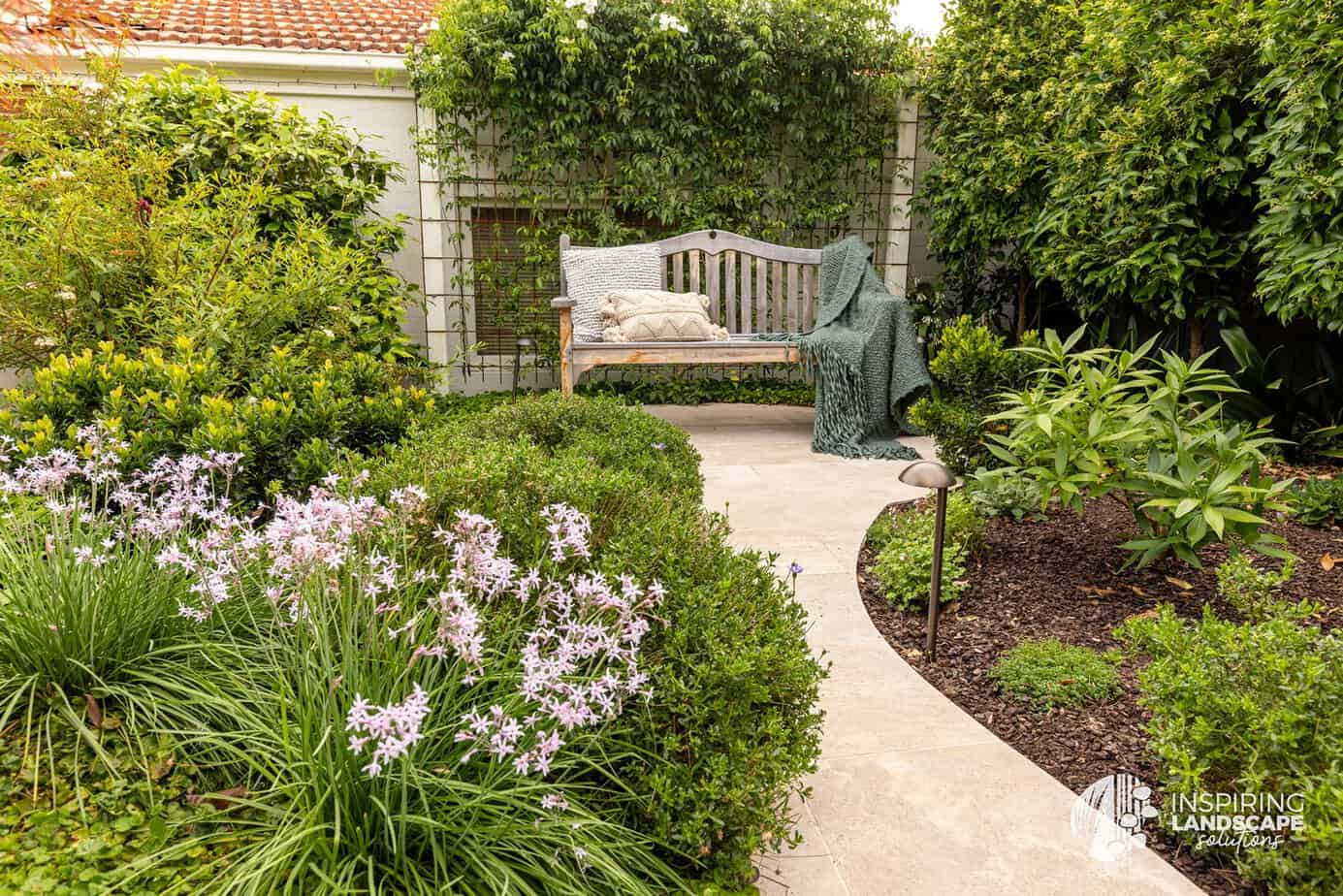
Garden beds surrounding bench seat in Berwick landscape design

Why Biodiverse Planting Creates Better Gardens (Part 1)

August 31, 2026
-
Biodiverse Planting, Design, Garden, Garden Design, Landscape Design, Plants
-
No comments
-
Posted by Parveen

When people begin planning a new garden, one of the first questions they ask is, “What plants should we use to create a sustainable and vibrant space?” As a Melbourne landscape designer, I rarely start there.

Instead, I ask a different question:

“How do you want to feel when you walk through your garden ten years from now?”

That question changes everything.

The most memorable gardens are never simply collections of beautiful plants. They’re living communities that evolve, surprise, delight and reconnect us with nature every single day. They become places where children chase butterflies, birdsong replaces traffic noise, every season reveals something new, and simply sitting outside after a long day becomes restorative.

To me, this is where truly great landscape design begins.

A professionally designed garden should do far more than enhance street appeal. It should enrich your daily life, foster emotional wellbeing, deepen your connection to nature, support local biodiversity, adapt to our changing climate, and continue becoming more beautiful as it matures. 

That’s the philosophy behind every landscape I design. I don’t simply select plants or create attractive planting schemes; I compose living plant communities that enrich people’s lives while giving nature a place to thrive.

scabiosa blue lace is a long flowering perennial

More than beautiful plants creating living ecological systems

At its core, biodiverse planting design creates plant communities that function like living ecosystems rather than static decorative displays. 

Instead of relying on isolated feature plants or repetitive mass planting, a carefully considered planting palette combines trees, shrubs, perennials, ornamental grasses, climbers, and groundcovers into layered communities that work together. 

For Melbourne gardens, this might mean pairing an evergreen structure from Elaeocarpus Reticulatus with the seasonal colour of Salvia Bodacious® ‘Smokey Jazz’, the architectural foliage

of Patersonia Occidentalis, and long-flowering perennials like Scabiosa ‘Blue Lace’, demonstrating how diverse plantings support ecological health.

Each species contributes something unique, but together they create a planting community that is far richer than any individual plant could achieve. While this is just one example, I carefully tailor every planting palette to the site, architecture, lifestyle, and environmental conditions of each project.

Nature has been refining this approach for millions of years.

Walk through a woodland, coastal dune or native grassland, and you’ll quickly notice that no plant exists in isolation. Every species plays a role, and those roles overlap in complex and interdependent ways.

Some plants stabilise soil. Others attract pollinators. Some provide shelter for wildlife, while others flower at precisely the right moment to feed beneficial insects. Beneath the surface, intricate root systems interact with fungi and microorganisms, continually improving soil health and nutrient cycling.

None of this happens by chance.

Likewise, successful garden design isn’t simply about choosing attractive plants. It’s about carefully composing relationships that allow an entire landscape to function as one interconnected living system.

That is where the real artistry of planting design lies.

Why complexity creates stronger gardens

In traditional garden design, simplicity is often associated with elegance. 

Yet in biodiverse planting design, complexity fosters resilience, beauty, and a sense of wonder that lasts over time.

I often compare it to an orchestra. 

A single violin can produce beautiful music.

An entire orchestra creates emotion.

Strings, brass, percussion and woodwind each contribute

Variety of flowers, succulents, shrubs and trees in the Nunawading garden design

something unique, yet together they produce a richness that no single instrument could ever achieve alone.

Planting design works in the same way. 

Each plant layer contributes something different while simultaneously supporting every other layer.

Together they create:

*Longer and overlapping flowering seasons

*Richer textures and seasonal interest

*Greater resilience to pests and disease

*Improved soil structure through varied root systems

*Valuable habitat for birds, butterflies and pollinators

*Increased tolerance to Melbourne’s changing climate

*Cooler outdoor spaces through layered shade and evapotranspiration

Greater ecological stability over time.

Groundcovers help retain soil moisture.

Perennials provide seasonal colour.

Shrubs create shelter and microclimates.

Trees regulate temperature, filter light and establish the structural framework of the garden.

The result is far greater than the sum of its individual parts.

One of my favourite planting combinations is to layer deciduous canopy trees over evergreen shrubs, weaving ornamental grasses and flowering perennials through the understorey. In spring, flowering bulbs emerge beneath fresh foliage. Summer brings movement and pollinator activity. Autumn introduces spectacular foliage colour, while winter reveals bark texture, evergreen structure and seed heads that continue supporting birds and beneficial insects. Each layer has a purpose, keeping the garden engaging year-round rather than peaking for only a few weeks.

View of the trellised fenceline of the Brunswick East garden design

Art is creating complexity without creating maintenance

One of the biggest misconceptions surrounding biodiverse gardens is that more plants automatically mean more work.

In reality, careful landscape planting does exactly the opposite, empowering you to create gardens that thrive with less effort.

The goal isn’t simply to add more species.

The goal is to design plant communities that naturally support one another.

When plants occupy appropriate ecological niches, they

suppress weeds, shade the soil, reduce evaporation, encourage beneficial insects, and build healthier soils.

Over time, the landscape begins regulating itself rather than relying on constant human intervention.

The art isn’t creating complexity.

The art is creating the illusion of effortless abundance while designing a landscape that becomes easier to maintain as it matures. I consider balancing biodiversity with practical maintenance on every project.

While I love creating richly layered planting, I also understand that gardens need to work for busy families. Every planting decision considers future maintenance, longevity, seasonal performance, and how each plant contributes to the broader living system.

That balance is what transforms a beautiful garden into one that remains enjoyable for decades.

For example, I may repeat dependable structural plants throughout a garden while introducing smaller groups of seasonal performers that provide changing colour and texture. This creates the richness people associate with natural landscapes without requiring dozens of high-maintenance species. 

Carefully selecting hardy plants suited to Melbourne’s climate also reduces irrigation, pruning and replacement over time, proving that biodiversity and low maintenance are not mutually exclusive when planting is thoughtfully designed.

One recent Melbourne landscape design project perfectly demonstrates this philosophy. Rather than filling every available space with plants, the design focused on creating carefully layered planting communities that balanced evergreen structure, flowering perennials, ornamental grasses and seasonal interest. 

Every plant was selected because it contributed something meaningful to the overall ecosystem. Whether that was supporting pollinators, providing habitat, creating movement, framing views or reducing long-term maintenance. The result is a garden that feels lush and immersive without feeling cluttered, becoming richer and more beautiful as the planting matures year after year.

Why nature makes us feel better

Humans have an innate desire to connect with nature.

This principle sits at the heart of biophilic landscape design, which recognises that our physical and emotional wellbeing improves when we experience natural environments.

Biodiverse planting design naturally encourages this connection because it engages all our senses.

Instead of delivering a fixed visual composition, these gardens constantly evolve. 

Grasses sway gently in the breeze.

Morning sunlight filters through layered canopies.

Birds move between shrubs.

Butterflies drift from flower to flower.

Bright Colours and Smells Are A Must For Sensory Gardens

The fragrance of flowering plants changes throughout the day.

Textures shift with the seasons.

Light, shadow and colour continually transform the landscape.

Rather than simply looking at a garden, you become immersed within it.

Every visit feels slightly different.

Every season reveals something new.

That quiet sense of discovery is precisely what makes these landscapes so restorative.

One recent courtyard project reinforced this perfectly. Although compact, introducing layered planting, seasonal texture, and greater biodiversity completely transformed how the owners experienced the space. What had previously felt like an overlooked area became somewhere they genuinely wanted to spend time; proof that meaningful connections with nature don’t require large gardens, only thoughtful planting design.

Biodiversity as a daily experience

Biodiversity is often discussed in scientific language.

For homeowners, however, its greatest value is something far more personal.

It is experienced.

A biodiverse garden is never truly still. 

Even when it appears calm, it is active at multiple scales.

You might notice bees moving between flowering layers, tiny native birds weaving through shrubs, dragonflies hovering over water, or the subtle rustle of ornamental grasses responding to the afternoon breeze. 

Even beneath the soil, countless unseen interactions are quietly supporting healthier plants.

These tiny interactions, often described as “micro-moments”, accumulate into something surprisingly powerful. The garden becomes immersive.

Your eyes wander.

Your curiosity grows.

Children discover insects.

Visitors notice details they missed before.

The garden continues telling new stories long after it has been planted.

I’ve always believed that a great garden should never reveal its whole story in the first five minutes. It should reward curiosity and invite people to slow down. A shaft of afternoon light filtering through ornamental grasses, the unexpected appearance of a butterfly, the changing silhouette of a deciduous tree through the seasons, or a flowering perennial that quietly steals the show before gracefully giving way to another. 

These seemingly small moments aren’t accidental; they’re carefully composed experiences that make layered planting feel alive and emotionally engaging long after the garden is complete.

For me, that’s one of the greatest joys of landscape design.

I don’t design gardens to impress people the day construction finishes.

I design gardens that become more beautiful five, ten and twenty years later.

Why My Planting Designs Feel Different

Every landscape designer selects plants.

My role goes far beyond choosing species that look attractive together.

I carefully compose living plant communities that balance biodiversity, structure, seasonal succession, texture, colour, wildlife habitat, maintenance requirements and long-term resilience.

Each planting palette is unique because every family lives differently.

Front view of tall green conifers announcing Brighton garden design front entry

Some clients want restorative spaces to unwind after work.

Others want children to connect with nature.

Some seek greater privacy.

Others want productive gardens, bird habitat or year-round visual interest.

Understanding these aspirations allows me to create landscape designs that feel deeply personal while functioning as thriving ecological systems.

Where clients engage me during the construction phase, I continue working alongside them to refine planting layouts on site, source quality plant material, and make thoughtful adjustments as real-world conditions evolve.

As living landscapes are never static, I believe the best results come from remaining involved as the garden begins its journey, ensuring the original design vision is realised with the same care and attention that shaped it from the beginning.

The result is not simply a beautiful garden.

It is a landscape that feels alive.

One that rewards repeat visits because there is always something new to discover.

Follow us on social media
  • Facebook
  • Instagram
  • Houzz
Email
PREVIOUS POST
The Real Cost of Chasing Garden Trends: Creating a Timeless Landscape Design for Melbourne Homes

Parveen

Recent Posts
  • Why Biodiverse Planting Creates Better Gardens (Part 1)
  • The Real Cost of Chasing Garden Trends: Creating a Timeless Landscape Design for Melbourne Homes
  • Chelsea Flower Show 2026 Highlights and Trends
  • How Garden Designers Create a Connection Between People and Nature
  • Gardening Practices We Need to Learn From
Instagram

inspiringlandscapes.com.au

I’ve always loved this quote.⁠ ⁠ Not because it’s I’ve always loved this quote.⁠
⁠
Not because it’s about trees but because it’s about believing in the future.⁠
⁠
Every magnificent tree began with someone deciding that tomorrow was worth investing in.⁠⁠
⁠
As a landscape designer, I don’t just see a tree. I see children climbing its branches.⁠ Friends gathering beneath its canopy.⁠ Birds finding a home.⁠
Summer lunches in its shade and memories that haven’t happened yet.⁠
⁠
One of the things I love most about my profession is that, in many ways, I’m designing for people I’ll never meet.⁠
⁠
The family who buys the home in 30 years.⁠ The grandchildren who’ll swing from its branches.⁠ The next generation who’ll enjoy the shade without ever knowing who planted the tree.⁠ That’s a privilege I never take for granted.⁠
⁠
Great landscape design isn’t just about creating something beautiful for today.⁠ It’s about creating places that become richer, more meaningful, and more generous with time.⁠
⁠
Flowers may capture attention. Trees capture generations.⁠ That’s why I don’t just design gardens.⁠ I design moments worth remembering, for today’s family and for the ones still to come.⁠
⁠
💚 If you could plant one tree today that someone might treasure 50 years from now, what would it be?⁠
⁠
🌿 Our passion, your garden.⁠
💙 Some plants don’t demand attention; they quietly 💙 Some plants don’t demand attention; they quietly earn it.⁠
⁠
The Great Forget-me-not (Brunnera ‘Jack Frost’) is one of those plants.⁠
⁠
Its delicate blue flowers may steal the spotlight in spring, but it’s the beautifully silver-veined foliage that keeps performing long after the blooms have faded.⁠
⁠
It’s proof that the most memorable plants aren’t always the loudest.⁠ Kind of like that quiet friend who somehow ends up being everyone’s favourite.⁠
⁠
As a landscape designer, I love plants like this because they reward you the more you notice them.⁠
⁠
They add texture.⁠ They catch the light.⁠ They soften a shady corner.⁠ And they quietly weave the whole garden together without asking for applause.⁠
⁠
That’s a philosophy I try to bring to every garden I design.⁠ Not every moment needs to shout.⁠ Sometimes the most memorable gardens are built from layers of quiet discoveries.⁠
⁠
I don’t just design gardens.⁠ I design moments worth remembering.⁠ And perhaps it’s fitting that a plant called ‘forget-me-not’ has a way of becoming one you’ll never forget. 💙🌿⁠
⁠
💙 What’s one plant in your garden that quietly steals your heart year after year?⁠
⁠
Our passion, your garden.⁠⁠
⁠
📸 2023 Glen Iris project⁠
⁠
@pk____photography
🌳 A great garden doesn’t stop at the front fence.⁠ 🌳 A great garden doesn’t stop at the front fence.⁠
⁠
One of my favourite things about landscape design is that it doesn’t just shape how you experience your home.⁠ It shapes how everyone else experiences your street.⁠
⁠
A great garden contributes to the neighbourhood, not just the property.⁠ A beautiful tree can soften a streetscape.⁠ Offer shade on a hot summer’s day.⁠ Give birds a place to rest, and quietly make someone’s walk home just that little bit nicer.⁠
⁠
If your branches are making the postie practise limbo, or encouraging pedestrians to test their ducking skills, it’s probably time for a trim. 😄⁠
⁠
Regular pruning isn’t just about tidiness.⁠ It keeps trees healthier, pathways safer, and ensures they remain good neighbours for years to come.⁠
⁠
That’s something I think about in every landscape I design.⁠ Not just creating beautiful gardens but ⁠creating landscapes that enrich the lives of the people who live there, the neighbours who walk past, and even the people I’ll never meet.⁠
⁠
Great landscape design isn’t just about improving one home; it’s about making an entire street feel different.⁠⁠
⁠
💚 Has a beautiful tree or front garden ever made you slow down and appreciate your neighbourhood?⁠
⁠
🌿 Our passion, your garden.⁠
⁠
📸 2023 Glen Iris project⁠
⁠
@pk____photography
🌿✨ Some gardens make you smile; this one made us w 🌿✨ Some gardens make you smile; this one made us work for it!⁠
⁠
I absolutely love what we were able to create with our Forest Hill design, but believe me; it certainly wasn’t easy or straightforward! 😍⁠
⁠
Not only did we tackle a beautifully complex native planting scheme, but we also had to navigate the council’s requirements for the property’s Significant Landscape Overlay (SLO). Let’s just say there were a few hoops to jump through along the way! 😅⁠
⁠
The end result? A lush, bushy native garden that’s bursting with life while still making room for all the practical things that matter: ⁠
⁠
A productive veggie patch ✔️ ⁠
A storage shed ✔️ ⁠
Plenty of lawn for the kids to burn off energy (and perhaps create a little chaos 😉) ✔️⁠
⁠
Projects like this are a great reminder that a landscape design isn’t something you simply hand over and hope for the best.⁠
⁠
The real magic often happens during construction when unexpected challenges pop up, decisions need to be made on-site, and someone is there to make sure the original vision isn’t compromised.⁠
⁠
That’s why it meant so much to hear these words from our wonderful clients, Gokul and Danielle (you’ll find Danielle’s full review in the images):⁠
⁠
💚 “The design itself was great, but looking back, where Parveen added the most value was staying involved throughout the build.”⁠
⁠
💚 “I don’t think I would have achieved the same result if the design had simply been handed over at the start.”⁠
⁠
Great landscapes aren’t just designed; they’re nurtured all the way through to completion (and beyond). That’s how ideas on paper become gardens you’ll love for years to come. 🌿⁠

⁠
📷 Forest Hill front garden design 2025. Implemented in June 2026
🍷 The best parties have one thing in common: nobod 🍷 The best parties have one thing in common: nobody wants to leave.⁠
⁠
It rarely has anything to do with the food.⁠ Or whether the cushions perfectly match.⁠ Or even whether Aunt Lily managed to avoid the mosquitoes this time. 😄⁠
⁠
The best outdoor spaces have an atmosphere that quietly encourages people to stay for “just one more drink”.⁠
⁠
One more conversation.⁠ One more story.⁠ One more laugh under the stars.⁠
⁠
As a landscape designer, I don’t think entertaining begins with a dining table.⁠ It begins with how a space makes people feel.⁠
⁠
Comfortable seating that invites you to sink in.⁠ Lighting that creates atmosphere instead of glare.⁠ Layered planting that makes the garden feel intimate.⁠ And little moments of discovery that make people want to wander just a little further.⁠
⁠
I don’t just design gardens.⁠ I design the conversations that happen within them.⁠ ⁠
⁠
Perhaps the greatest compliment any garden can receive isn’t, “Your garden is beautiful.”⁠ It’s⁠ “We should do this again soon.”⁠ That’s when you know the design has done its job.⁠
⁠
🍷 What’s one thing that always makes people stay longer in your backyard?⁠
⁠
🌿 Our passion, your garden.⁠
⁠
📸2022 Murrumbeena project ⁠
@paul.osta.photography
🌿 Trends fade. Great gardens don’t.⁠ ⁠ It’s easy t 🌿 Trends fade. Great gardens don’t.⁠
⁠
It’s easy to fall in love with the latest Pinterest-worthy garden or Instagram trend. But have you ever stopped to think about what it could actually cost you?⁠
⁠
Some trends don’t just date quickly; they can lead to expensive renovations, higher maintenance, bigger water bills, and outdoor spaces that don’t actually suit the way you live.⁠
⁠
The best gardens aren’t designed to impress for a season. They’re designed to grow with you, reflect your lifestyle, and look just as beautiful years from now.⁠
⁠
How do you create a garden that feels current without becoming yesterday’s fad?⁠
⁠
Our latest blog explores the hidden cost of chasing garden trends and shares a smarter way to create an outdoor space you’ll love for years to come.⁠
⁠
👉 Before you jump on the next big garden trend, read this first: https://inspiringlandscapes.com.au/the-real-cost-of-chasing-garden-trends-creating-a-timeless-landscape-design-for-melbourne-homes/⁠
⁠
📸 Camberwell project 2018
🎨 “My garden is my most beautiful masterpiece.” Cl 🎨 “My garden is my most beautiful masterpiece.” Claude Monet 🌿⁠
⁠
I’ve always loved this quote because it reminds us that gardens are unlike any other work of art.⁠
⁠
A painting is finished.⁠ A garden never is.⁠ It changes with the seasons.⁠
It grows wiser with time, and it surprises you when you least expect it.⁠
⁠
Every now and then, it humbles you by reminding you that the plant you were absolutely convinced would thrive had other plans. 😄⁠
⁠
As a landscape designer, I don’t see gardens as collections of plants.⁠ I see them as living masterpieces that tell the story of the people who call them home.⁠
⁠
Every winding path, favourite seat, flowering tree and quiet corner becomes part of that story.⁠ ⁠
⁠
The most beautiful gardens aren’t the ones that look perfect.⁠ They’re the ones that become more meaningful with every passing season.⁠⁠
⁠
Years from now, people probably won’t remember every plant name. They’ll remember family lunches under the tree. Morning coffees in the sunshine.⁠ Children chasing butterflies.⁠ The scent that greeted them at the front gate.⁠ That’s the real masterpiece.⁠
⁠
Our passion, your garden. 🌿⁠
🐝 Happy World Honey Bee Day! 🌼⁠ ⁠ If gardens had a 🐝 Happy World Honey Bee Day! 🌼⁠
⁠
If gardens had an employee of the month, the bees would win every single time. 🏆🐝⁠
⁠
No complaints.⁠ No coffee breaks.⁠ Just thousands of flowers visited every day, quietly keeping our gardens alive.⁠
⁠
In fact, a single honeybee can visit up to 5,000 flowers in one day. Talk about earning your keep!⁠
⁠
As a landscape designer, I love creating gardens that don’t just look beautiful; they feel alive.⁠
⁠
That means designing spaces where people want to linger... and where bees, butterflies and birds naturally want to stay too.⁠ I believe the best gardens aren’t just enjoyed by us; they’re shared.⁠
⁠
Every flowering plant becomes a tiny café.⁠ Every season offers a new menu. Every very buzzing visitor reminds us that a healthy garden is about so much more than what we see.⁠
⁠
I don’t just design gardens; I design moments worth remembering.⁠
⁠
Sometimes those moments are family dinners outdoors or a quiet morning coffee.⁠
⁠
Other times they’re simply watching a tiny bee disappear into a flower and realising they’re part of something much bigger. 🌼🐝⁠⁠
⁠
Plant a few more flowers.⁠ Skip the unnecessary chemicals.⁠ Leave a little corner for nature.⁠
⁠
When we design gardens that support wildlife, we create gardens that truly come alive.⁠
⁠
💛 Happy World Honey Bee Day!⁠
⁠
🐝 What’s the busiest pollinator in your garden right now?⁠
💡 The sun clocks off, but a great garden shouldn’t 💡 The sun clocks off, but a great garden shouldn’t. 🌙⁠
⁠
One of the biggest mistakes I see is homeowners investing thousands into a beautiful garden, only to let it disappear after sunset.⁠
⁠
It’s like buying a masterpiece and only looking at it during office hours. 😄⁠
⁠For me, landscape lighting has never been about making a garden brighter.⁠
⁠
It’s about making it feel different.⁠ A softly lit path that quietly says, “Come this way.”⁠ A favourite tree that becomes sculpture after dark.⁠ A warm glow that turns an ordinary Tuesday evening into dinner outdoors.⁠
⁠
That’s why I believe lighting isn’t the finishing touch.⁠ It’s part of the design from the very beginning.⁠ Of course, even the best lighting needs a little love.⁠
⁠
Keep fittings clean, trim plants that have become a little too enthusiastic, and replace tired bulbs before they leave parts of your garden sitting in the dark.⁠
⁠
I don’t just design gardens; I design moments worth remembering, day and night.⁠ 💡 What’s your favourite part of your garden after sunset?⁠
⁠
🌿 Our passion, your garden.⁠⁠
⁠
📸2022 Murrumbeena project ⁠
@paul.osta.photography 
⁠
Some flowers simply bloom, but dahlias put on a pe Some flowers simply bloom, but dahlias put on a performance. 🌸⁠
⁠
Layer upon layer of petals, each bloom feels like nature reminding us not to rush past the beautiful things.⁠
⁠
I love using dahlias where they can create that unexpected moment: the flower that catches your eye, slows your pace, and makes you smile before you’ve even realised you’ve stopped.⁠
⁠
Because that’s how I approach every landscape.⁠ Not simply designing beautiful gardens but designing gardens that feel different.⁠
⁠
Gardens where every plant has a purpose.⁠ Where every path invites exploration.⁠ Where every season gives you a reason to step outside.⁠
⁠
People rarely remember every plant, but they remember how the garden made them feel.⁠ That’s why I often say the following:⁠
⁠
I don’t just design gardens. I design moments worth remembering.⁠ Unlike most performers, dahlias don’t mind an encore; the more you cut them, the more they bloom. 😄✂️⁠
⁠
Our passion, your garden. 🌿⁠
⁠
📸2022 Murrumbeena project ⁠
@paul.osta.photography
Sometimes the hardest part of landscape design isn Sometimes the hardest part of landscape design isn’t choosing what to include; it’s knowing what to leave out. 🌿⁠
⁠
I could have added another twenty plants. Instead, every plant and every design element here has earned its place.⁠
⁠
That’s my philosophy: beautiful gardens aren’t created by adding more. They’re created by giving every element a purpose.⁠
⁠
Now comes the magic: watching the garden grow into itself.⁠
⁠
Huge thanks to @lumpsculpture for creating these beautiful custom screens. They finish this minimalistic design perfectly.⁠
⁠
📸 2025 Blackburn project. Completed in July 2025⁠.
A garden should never tell you its whole story in A garden should never tell you its whole story in the first five minutes. 🌿⁠
⁠
It should reveal itself slowly.⁠
⁠
Around a bend in the path.⁠ Behind a cloud of soft sage foliage.⁠ In the form of a bronze rabbit who, for the record, has been promoted to chief plant security officer. 🐇⁠
⁠
I love weaving little moments like this into my landscapes because they’re about so much more than decoration.⁠
⁠
They’re moments of surprise.⁠ Moments of joy.⁠ Moments that make you pause, smile and look a little closer.⁠
⁠
That’s my design philosophy.⁠
⁠
Not simply creating beautiful gardens. Creating gardens that people never quite finish discovering.⁠ Long after people forget which plant it was, they’ll remember how the garden made them feel.⁠
⁠
Let us know in the comments how your garden makes you feel.⁠
⁠
📸 2023 Glen Iris project⁠
@pk____photography
I don’t think it’s the plants that heal us.⁠ I thi I don’t think it’s the plants that heal us.⁠ I think it’s the pause.⁠
⁠
That moment when your morning coffee somehow tastes better outside.⁠
When the birds are louder than your phone and the breeze reminds you there’s no prize for rushing through life (unless you’ve got a possum stealing your tomatoes, then all bets are off). 🍅😂)⁠
⁠
After years of designing gardens, I’ve realised something.⁠ People rarely remember the exact paving, the feature tree or the colour of the flowers.⁠
⁠
They remember how the garden made them feel, and that’s why I don’t just design beautiful landscapes.⁠ I design for the quiet moments.⁠
⁠
The morning coffee that turns into twenty peaceful minutes.⁠ The family dinner that drifts outside because no one wants to leave.⁠ The kids who somehow stay outdoors longer than they stay on their iPads.⁠
⁠
To me, that’s what great landscape design is really about.⁠ Not filling every corner with plants, chasing trends or creating a garden that’s admired for five minutes.⁠ Creating a place that gently invites you to slow down, every single day.⁠
⁠
The most valuable part of any garden isn’t what you see; it’s what you experience.⁠ If your garden gives you even one quiet moment to breathe, reconnect or simply be present, then it has already done something extraordinary.⁠
⁠
🌱 What’s your favourite quiet moment in the garden? I’d love to hear what keeps drawing you back outside.⁠
🌿 Herbs at the shop are quietly draining your wall 🌿 Herbs at the shop are quietly draining your wallet.⁠
⁠
Imagine stepping outside, snipping a handful of fresh basil for your pasta, mint for your tea, or rosemary for your roast, all without leaving home.⁠
⁠
Growing your own herbs isn’t just satisfying: it can save money, reduce waste, and add incredible flavour to your meals. ⁠
⁠
Better yet, you don’t need a huge backyard. Many herbs are perfectly happy growing in pots or even on a sunny windowsill. 🌱⁠
⁠
Ready to discover which herbs are easiest to grow, which ones thrive indoors, and a few surprising favourites you might not have considered?⁠
⁠
👉 Your future self (and your taste buds) will thank you! Read our blog about growing herbs, and tell us what’s the one herb you can’t live without. 🌿👇⁠
⁠
https://inspiringlandscapes.com.au/growing-herbs/⁠
⁠
📸 Nunawading project design detail
🌿 Give a vine an inch, and it’ll redecorate your e 🌿 Give a vine an inch, and it’ll redecorate your entire house. 😉⁠
⁠
Climbing plants are the ambitious overachievers of the garden. Give them a fence, pergola, wall or trellis, and they’ll happily cover it; then politely ask if they can have the gutters, roof and your next door neighbour’s fence too. 😅⁠
⁠
The good news? Keeping them in line is much easier than staging a botanical intervention.⁠
⁠
✂️ Prune little and often. A quick trim every few weeks beats wrestling a leafy monster at the end of the season.⁠
⁠
🌱 Guide new growth. A little training now saves a lot of untangling later and helps create a fuller, more beautiful display.⁠
⁠
💧 Feed and mulch each year. Think of it as paying your climber in exchange for good behaviour (results may vary!). 🌸⁠
⁠
🍃 Remove dead, damaged or overcrowded stems. Better airflow means a healthier plant and fewer unwanted visitors.⁠
⁠
The secret to stunning climbers isn’t endless maintenance; it’s a few small jobs done regularly. Keep them happy, and they’ll reward you with flowers, fragrance and lush greenery, without attempting world domination. 🌿⁠
⁠
✨ What’s your favourite climber? Star jasmine, wisteria, bougainvillaea, climbing roses or another garden superstar? Tell us below! 👇⁠
⁠
📸 Caulfield Grammar, Melbourne, Wheelers Hill campus
🌸 My hydrangeas have more wardrobe changes than I 🌸 My hydrangeas have more wardrobe changes than I do. 😂⁠
⁠
When I think I know what colour they’ll be, they surprise me again. Honestly, living with hydrangeas is like having a friend who changes their hair colour every season, and somehow pulls it off every time. 😍⁠
⁠
Most flowers seem to make up their minds and stick to one colour. Hydrangeas, on the other hand, wake up and choose chaos.⁠
⁠
One year, they’re blue. Next, they’re pink. Sometimes they can’t decide and settle somewhere in between with gorgeous purple blooms. It’s like having a flower with multiple personalities, and I’m here for it.⁠
⁠
I think that’s one of the reasons I’ve always loved them. Those giant fluffy flower heads make such a statement, and when you think you’ve figured them out, they surprise you again.⁠
⁠
And can we talk about how they refuse to quit? Even after the blooms have faded, I can’t bring myself to cut them off. Those dried flowers hanging around through the seasons have a charm all their own. ⁠
⁠
They’re basically the garden equivalent of saying, “I’m not done being fabulous yet.” ✨⁠
⁠
If you ask me, hydrangeas are proof that you don’t always need to have everything figured out. Sometimes changing your mind is part of the beauty. 💙⁠
⁠
🌿 If your hydrangeas could pick their outfit for the season, what would they wear? Team dreamy blue, pretty pink, classic white, or somewhere in the “I can’t decide” purple camp? 👇😄⁠
⁠
📸 2023 Glen Iris detail @pk____photography⁠.
🪵 Who needs boring chairs when you can sit on art? 🪵 Who needs boring chairs when you can sit on art? 😍⁠
⁠
These tree stumps have officially had the ultimate glow-up. Once minding their own business as ordinary bits of timber, they’ve come back for a second act as stunning pieces of art that just happen to be excellent seats. Talk about overachievers. 😂⁠
⁠
☕ To some, these are the perfect spots for a morning coffee.⁠
👑 To kids, they’re royal thrones, pirate ships, or secret headquarters.⁠
🎭 To guests, they’re guaranteed conversation starters.⁠
🌳 And to nature lovers, they’re a wonderful way to give a beloved tree a whole new story.⁠
⁠
Functional art like this proves your garden doesn’t have to take itself too seriously. Sometimes the most memorable spaces are the ones that make people smile, spark a little imagination, and have visitors asking, “Where did you get THAT?!”⁠
⁠
✨ So, let’s hear your wild ideas! If you could turn one everyday garden item into a work of art, what would it be? A wheelbarrow fountain? A birdbath disco ball? A mailbox castle? We can’t wait to hear your creations! 😄👇⁠
⁠
📸2026 MIFGS Indigenous garden
Sometimes the biggest challenge isn’t the planting Sometimes the biggest challenge isn’t the planting; it’s redesigning the landscape to stop saying, “Good luck getting to the front door!” 😂🌿⁠
⁠
I was originally brought in to develop the planting design after most of the hardscape had already been locked in. As the project evolved, I had the opportunity to work closely with the clients and builder to refine key elements of the design.⁠
⁠
Together, we improved functionality, adjusted material and colour selections, and strengthened the relationship between the home and the landscape. Those early design refinements will make a huge difference to how the garden feels and functions for years to come.⁠
⁠
This beautiful new home has fantastic architectural bones, but the dramatic level changes called for a landscape that could soften the climb and create a far more welcoming arrival. Rather than simply filling spaces with plants, every garden was carefully considered as part of a larger composition.⁠
⁠
Strong evergreen structure frames the architecture, while layered seasonal planting brings colour, texture and interest to every garden pocket throughout the year. ⁠
⁠
Productive gardens sit conveniently besides the kitchen, every major window now looks onto greenery instead of blank boundaries, and generous lawns and meandering pathways create spaces that invite you to slow down and explore.⁠
⁠
A dedicated location for a feature sculpture has also been built into the front garden, creating a memorable focal point that gives the home its own identity and a true sense of arrival. This is something that sets it apart from every other house on the street.⁠
⁠
Great landscape design isn’t about squeezing plants into every spare corner; it’s about ensuring the hardscape, planting and architecture all work together. ⁠
⁠
When those elements are considered as one, the result is a home that feels balanced, welcoming and deeply connected to its landscape, even if the plants need a little time to catch up. 🌱⁠
⁠
📸 Wheelers Hill design June 2026
🍅 STOP APOLOGISING FOR YOUR MESSY GARDEN. 🍅⁠ ⁠ In 🍅 STOP APOLOGISING FOR YOUR MESSY GARDEN. 🍅⁠
⁠
In a world full of picture-perfect garden photos, it’s easy to think every bed should be weed-free, every row straight, and every plant thriving. But real gardens are rarely perfect.⁠
⁠
They have weeds, overgrown corners, forgotten pots, and plants doing their own thing. Yet despite the mess, they still produce tomatoes, herbs, beans, pumpkins, and countless moments of joy.⁠
⁠
A thriving garden isn’t about perfection; it’s about persistence.⁠
⁠
So if your garden looks a little wild right now, don’t be discouraged. Every flower blooming, every vegetable growing, and every bee visiting is proof that nature doesn’t need perfection to work its magic.⁠
⁠
💚 What’s growing in your “imperfect” garden right now? Drop a photo or tell us in the comments; we’d love to celebrate the beauty of real, lived-in gardens with you!⁠
Chelsea’s hottest trend? Going Australian. 🌿⁠ ⁠ Th Chelsea’s hottest trend? Going Australian. 🌿⁠
⁠
The 2026 Chelsea Flower Show unveiled the garden trends set to influence outdoor spaces around the globe, but a few of them might feel surprisingly familiar.⁠
⁠
Think stunning landscapes that work with nature, clever design ideas that save water, and a colour trend that’s about to be everywhere.⁠
⁠
The question is, which of these global trends actually make sense for Australian backyards?⁠
⁠
We’ve rounded up the biggest takeaways from Chelsea and revealed how you can bring them home without needing a royal-sized garden. 👑🌱⁠
⁠
👉 Read the full blog and discover the trends worth watching (and the ones your garden will thank you for): https://inspiringlandscapes.com.au/chelsea-flower-show-2026-highlights-and-trends/⁠
Follow on Instagram
Archives
  • August 2026
  • July 2026
  • June 2026
  • May 2026
  • April 2026
  • March 2026
  • February 2026
  • January 2026
  • December 2025
  • November 2025
  • October 2025
  • August 2025
  • July 2025
  • June 2025
  • May 2025
  • April 2025
  • March 2025
  • January 2025
  • November 2024
  • October 2024
  • September 2024
  • July 2024
  • June 2024
  • May 2024
  • April 2024
  • February 2024
  • January 2024
  • December 2023
  • November 2023
  • September 2023
  • August 2023
  • July 2023
  • June 2023
  • May 2023
  • April 2023
  • March 2023
  • December 2022
  • November 2022
  • October 2022
  • July 2022
  • June 2022
  • April 2022
  • March 2022
  • January 2022
  • December 2021
  • September 2021
  • August 2021
  • July 2021
  • May 2021
  • April 2021
  • March 2021
  • February 2021
  • January 2021
  • December 2020
  • November 2020
  • October 2020
  • September 2020
  • August 2020
  • July 2020
  • June 2020
  • May 2020
  • April 2020
  • March 2020
  • February 2020
  • January 2020
  • December 2019
  • November 2019
  • October 2019
  • September 2019
  • August 2019
  • July 2019
  • June 2019
  • May 2019
  • April 2019
  • March 2019
  • February 2019
  • January 2019
  • December 2018
  • November 2018
  • October 2018
  • September 2018
  • August 2018
  • July 2018
  • June 2018
  • May 2018
  • April 2018
  • March 2018
  • February 2018
  • January 2018
  • December 2017
  • November 2017
  • October 2017
  • September 2017
  • August 2017
  • July 2017
  • June 2017
  • May 2017
  • April 2017
  • March 2017
Categories
  • Animals
  • Arbour
  • Architects
  • Art
  • Australian Natives
  • Balcony Gardens
  • Biodiverse Planting
  • Biophilia
  • Birds
  • Blog
  • Budgeting
  • Children
  • Colour
  • Colour and Scent
  • Construction
  • Decking
  • Design
  • Edibles
  • Feng Shui
  • Flower and Garden Shows
  • Flowers
  • Garden
  • Garden and Landscaping Trends
  • Garden Design
  • Gardening For Beginners
  • Gardens for Life
  • Health
  • Home
  • Home office
  • Irrigation
  • Landscape Design
  • Landscaping
  • Lawn
  • Lighting
  • Maintenance
  • Materials
  • Nature
  • Outdoor Entertaining
  • Paving
  • Plant collectors
  • Plants
  • Productive gardening
  • Productive gardens
  • Propagation
  • Pruning
  • Scented gardens
  • Seasonal tips
  • Site surveys
  • Soil pH
  • Staging for sale
  • Structures
  • Sustainable Gardening
  • Uncategorized
  • Water Features
  • Weather
  • Wellbeing
  • Wildlife

Leave a Comment

Your feedback is valuable for us. Your email will not be published.
Cancel Reply

Please wait...
Submit Comment →

Related News

Other posts that you should not miss
Side stepped path of a new build in Camberwell paved with bluestone pavers with narrow garden beds

The Real Cost of Chasing Garden Trends: Creating a Timeless Landscape Design for Melbourne Homes

August 13, 2026
-
Posted by Parveen
Every season brings a new wave of garden trends, from Pinterest-inspired planting schemes to the latest landscape design trends. As a Melbourne…
Read More →
Design, Garden, Garden and Landscaping Trends, Garden Design, Landscape Design, Landscaping, Maintenance, Plants
12 MIN READ
Chelsea Flower Show

Chelsea Flower Show 2026 Highlights and Trends

July 20, 2026
-
Posted by Parveen
Every May, the world's most celebrated horticultural event descends on the grounds of the Royal Hospital Chelsea in London, setting the tone…
Read More →
Colour, Design, Flower and Garden Shows, Flowers, Garden, Garden and Landscaping Trends, Garden Design, Landscape Design, Landscaping, Maintenance, Nature, Plants, Sustainable Gardening
7 MIN READ
Heading (1980 x 1020 px) (4)

How Garden Designers Create a Connection Between People and Nature

June 22, 2026
-
Posted by Parveen
Beyond choosing plants or crafting visually appealing spaces, understanding how garden designers foster emotional bonds deepens readers' appreciation for transformative gardens and…
Read More →
Children, Design, Garden Design, Health, Nature, Wellbeing
6 MIN READ

Follow us on social media

  • Facebook
  • Instagram
  • Houzz

ACN: 617 529 914

contact +614 0332 9128

contact@inspiringlandscapes.com.au

 
Why Biodiverse Planting Creates Better Gardens (Part 1) - Inspiring Landscape Solutions